
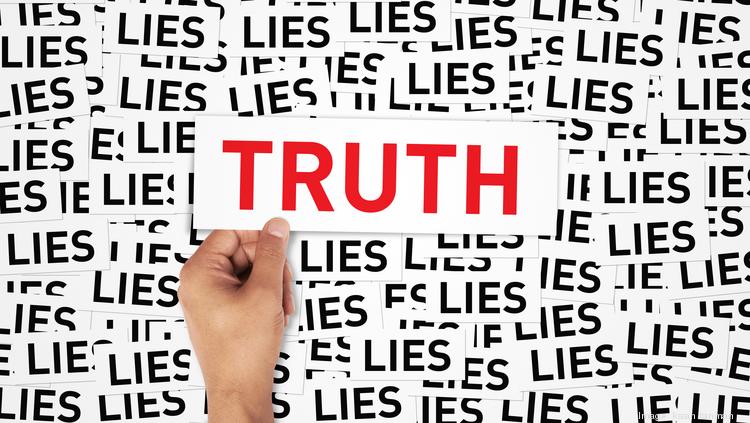

In the business world, lies and exaggerations are commonplace. This entails a clear understanding of the audience’s expectations, and feeding them inaccurate information that aligns with their needs. Usually, people treat Business as though rules that apply in the human world do not apply there. Using justifications like, “I am just doing business” or “I am just trying to make a profit”. However, lies are complexities which in the long run drain more energy to keep up than just telling the truth in the first place. Though lies have a short term and can be catastrophic to a business’ image, we highlight the motivation behind deception in business. Here are the Top 5 reasons why businesses lie:
Lack of strategic clarity.
Lies are most often told when a business is not clear about their identity, mission, objectives, and values. Employees who have no idea what the business stands for are more likely to withhold or distort truthful information.
Short term gain over Long term loss
The business is more focused on short term gain instead of what they will lose when discovered. A huge sale or a rise in profits is nothing compared to losing customer loyalty when things go sideways. Nowadays, lies usually backfire more often than not, thanks to the advent of social media.
Industry or Workplace pressure
There is a climate of “succeed at any cost” that encourages the cutting of corners. Companies which usually have a high employee turnover or management rotation are usually prone to this. This creates the opportunity to falsify information in the hopes that the culprit will no longer be in the position when the lie is discovered.
The assumption that technical lies are harder to discover
Most times, assumptions are the reasons behind poor judgement decisions. Most deceptive companies assume that the complexity of what they are doing is too technical to be discovered. However, the market is not always imperfect and sometimes the consumers have almost perfect knowledge of the market. The knowledge consumers have might be enough to spot abnormalities.
Assumptions that consumers are sheep
These businesses assume we will not be willing to consider they might be lying to us. Gone are the days when consumers swallowed information hook, line and sinker. When a customer patronises a business, they have it in mind to prove that the business’ claims are true. Hence, they do not hesitate to call out defaulters, especially on social media.
Businesses lie, in other words, because they can. They feel they can lie because the culture they have set up supports that perception. It is important for businesses to “be themselves”. The secret of success for any business is simple: loyal customers and increasing market share. No business can hope to succeed without creating relationships that matter. But for that to happen a business needs to be honest with itself, first and then its customers.